
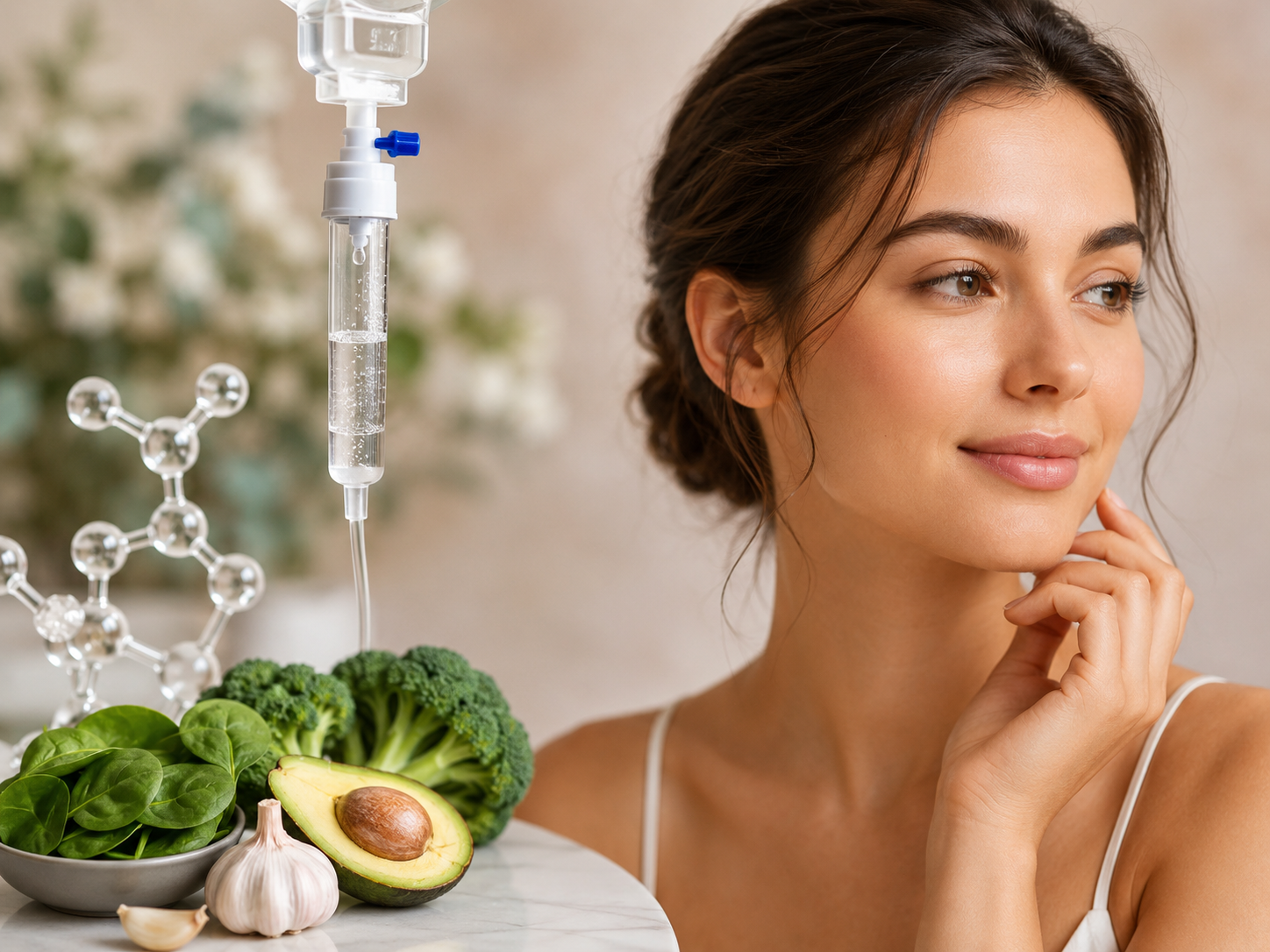
TL;DR: Glutathione is a natural antioxidant produced by your body that plays an important role in protecting cells from oxidative stress, supporting normal liver detoxification pathways, and maintaining skin brightness. Understanding exactly what it is and how it functions at a cellular level can help you make informed choices about how it may fit into your personal care plan.
You may have seen glutathione discussed for skin brightness, energy support, and wellness. Before you decide if it's right for you, it helps to understand what it can and can't do.
We'll keep this simple and clear. You deserve honest facts about what glutathione is so that you can make informed choices for your skin goals.
Your body naturally makes this molecule. It plays an important role in protecting cells from oxidative stress. Let's look closely at how it actually works.
Glutathione is a simple tripeptide made of three natural amino acids. Your liver builds it daily using glutamate, cysteine, and glycine. It lives inside almost every single cell of your body. It is often called an important antioxidant because it supports several protective processes in the body.
Its main job is to help neutralize free radicals before they cause harm.
Free radicals are unstable molecules that build up from normal metabolism and environmental stress. When you have too many, it leads to a state called oxidative stress.
For your skin, which can appear dull, uneven, or tired. It affects how vibrant your skin appears on the surface.
It also supports normal liver detoxification pathways. It helps the body process certain compounds so they can be removed. It also helps recycle other essential vitamins, such as C and E.
Your body's great at producing this antioxidant when you're young. However, natural production starts to slow down as we get older.
Daily stressors like poor sleep, pollution, and a busy lifestyle may affect your natural antioxidant levels. Alcohol use and environmental stress may also place extra demand on your antioxidant system.
That's why some people ask about ways to support healthy antioxidant levels. When these levels drop, your cells feel the impact of oxidative stress more intensely.
Our goal is not to chase trends. It's to help you understand your options and choose care that supports your natural glow.
Many clients ask us about the relationship between this molecule and skin tone. It doesn't offer an overnight transformation, but it may support cellular health as part of a broader wellness plan.
Some research suggests glutathione may influence melanin production, which is why it's often discussed in relation to brighter-looking skin and uneven tone. Results vary, and it shouldn't be treated as a guaranteed skin-lightening treatment.
A 2017 clinical study published in Clinical, Cosmetic and Investigational Dermatology found improvements in skin elasticity and the appearance of wrinkles in participants. However, results can vary, and more research is still needed.
We always emphasize that your skin goals are beautifully unique. Your personal results depend on your genetics, baseline skin health, and your specific treatment plan.
If you want to support your antioxidant levels, you might consider taking a standard oral supplement. However, oral glutathione can be harder for the body to absorb because digestion may break down part of the molecule before it reaches the bloodstream.
Some oral forms are being studied, but absorption can vary. That's why a consultation matters before choosing a treatment based on a trend.
IV delivery bypasses the digestive system, which is one reason clients may ask about it. IV vitamin therapy delivers nutrients directly into the bloodstream, but it should still be considered in the context of your health history and goals.
Glutathione may be included in a personalized IV therapy plan, depending on your goals and health history. We always recommend evaluating your health status thoroughly before moving forward.
Glutathione may not be the right fit for every person. Your health history, medications, allergies, pregnancy or breastfeeding status, and current medical concerns should be reviewed first.
A consultation helps us understand your goals and decide whether glutathione, IV therapy, or another option makes sense for you. Your safety always comes first in any medical aesthetic space.
Taina’s extensive nursing background brings a careful, clinical approach to every consultation and treatment plan. We balance your aesthetic goals with careful health screenings, ensuring your treatment plan is built around safety.
Your wellness choices shouldn't involve guesswork or high-pressure sales. We focus on an educational approach that prioritizes your safety, comfort, and natural-looking beauty.
We're here to answer your questions honestly and give you clear, transparent facts. Let's work together to discover what works best for your personal care plan.
Book a complimentary consultation with us to talk through your skin goals, health history, and wellness options in a calm, supportive setting.
It works hard behind the scenes to shield your cells from oxidative damage. It supports normal liver detoxification pathways and plays a role in immune system function. It is one part of the body’s natural system for managing oxidative stress.
You can give your body the raw building blocks it needs by eating sulphur-rich foods. Think about adding more broccoli, Brussels sprouts, garlic, and onions to your meals. Fresh avocados, spinach, and eggs are also excellent choices to help support production.
Patience is important because real cellular changes take time. Some studies have observed subtle changes in skin brightness over several weeks of consistent use, but timing and results vary. It's a gradual process of care, not an instant cosmetic fix.
Consistent daily support can help maintain steady antioxidant levels in your system. Some individuals report changes in skin clarity or overall wellness, but results vary and should be discussed with a qualified provider.
Disclaimer: We love sharing helpful insights on our blog! Please remember, this is for general information only and isn't personal medical advice. For guidance tailored to you, it's always best to chat with a qualified professional before making any treatment decisions. Everyone’s experience and results can vary.

