
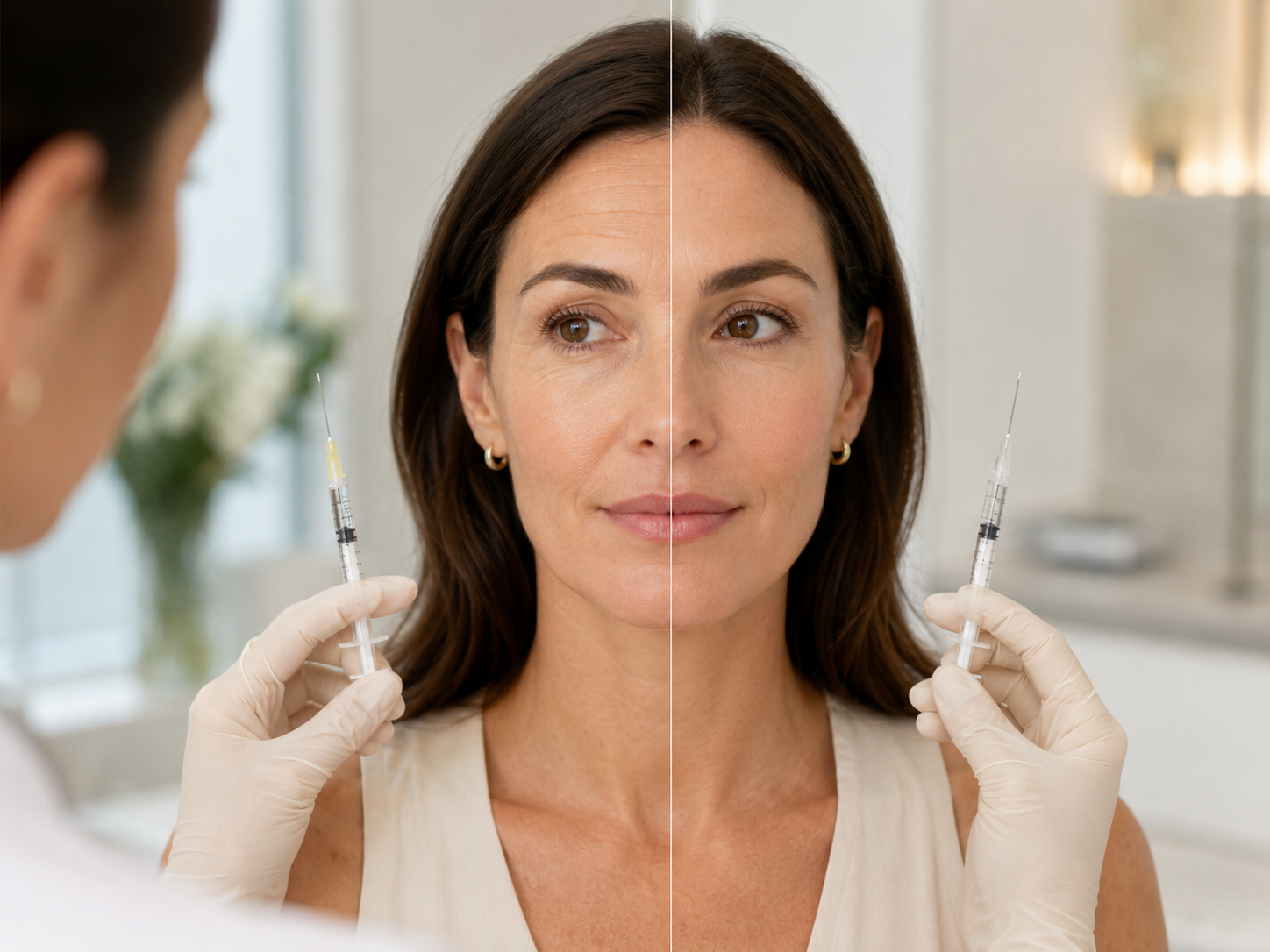
TL;DR: When you're trying to figure out the differences between Botox vs Dysport, it helps to look at how each formula behaves. Both are approved neuromodulators that temporarily soften dynamic facial lines by relaxing muscle movement. They feature different characteristics, including typical onset time, spread, dosing, and treatment planning, so your provider can tailor your session to your specific anatomy.
You may be noticing forehead lines, frown lines, or crow's feet that stay visible longer than they used to. It's completely normal, but maybe you want a softer, more rested look without changing your natural expression.
You've likely heard of two popular choices to help soften those lines. However, you might not know how they actually stack up against each other.
The choice between Botox vs Dysport often causes confusion before a first visit. It's easy to feel stuck when formulas seem almost identical. The marketing makes it sound like one's superior.
The right choice depends on your muscle movement, treatment area, health history, and goals.
We believe you shouldn't have to guess when it comes to your face. We'll walk through the actual facts together so you know what to expect.
Before comparing products, it helps to know how they work in the skin. Botox and Dysport are neuromodulators approved by Health Canada for specific cosmetic and therapeutic uses. They shouldn't be viewed as permanent fixes, but rather as temporary options.
When you laugh, frown, or squint, your muscles pull on your skin. Over time, that constant movement leaves lasting lines. These injectable treatments temporarily reduce the nerve signals that tell specific facial muscles to contract.
As a result, the muscle rests, and the overlying lines may soften as movement relaxes. They're both made from botulinum toxin type A, but they've got different formulations and dosing. This causes them to behave a bit differently once applied.
You might want to map out your calendar if you're planning for a special event. One commonly discussed difference is onset time.
According to data from the American Society of Plastic Surgeons, Dysport may start to show changes within a few days for some clients. On the other hand, Botox often begins to show within several days. Both typically continue developing over about two weeks.
Because of that, both treatments require patience before judging the final result.
The way a product moves under your skin's called diffusion. Dysport's often discussed as having a broader spread, which may be useful in larger areas like the forehead. For some clients, a broader spread can create a very smooth blend in open areas.
However, spread also depends on dose, placement, dilution, and injector technique.
Precision's necessary for tight spaces, like the area between your eyebrows. In those spots, you want careful placement that targets the intended muscles. A more focused approach can help target the intended muscles more precisely.
Neither option is inherently better than the other. The right tool simply depends on the exact spot we're treating.
A Note on Technique: The skill of your practitioner matters far more than the brand name on the vial. Beautiful results come from custom placement, not a specific product label.
It's easy to get confused by product math. Dysport and Botox units are measured differently, so treatment plans can't be compared unit-for-unit.
You'll notice the total unit numbers look higher if you switch from one to the other. That doesn't mean the product's weaker or diluted. It's simply a different measurement scale, much like centimeters versus inches.
We calculate dosing based on your facial movement, treatment area, goals, and health history.
Most people want to know how often they'll need a touch-up.
Many clients see results lasting around three to four months, though timing varies by treatment area, dose, muscle strength, metabolism, and consistency of treatment.
Your personal metabolism and daily expressions change this timeline. Some people clear the product faster than others. If you want to see how these options target specific areas, check out our tailored Botox and Dysport services at Afterglow Injection Studio.
Every face moves differently. Your movement patterns aren't the same as anyone else's.
For some clients, a broader spread may be useful in larger areas like the forehead. Meanwhile, lines between the brows often require careful, precise placement.
We don't believe in a cookie-cutter style. The goal isn't a frozen look that robs you of your expressions. It's about looking refreshed while still looking like yourself.
The product itself is only one piece of the puzzle. Safety and balance require an expert eye. A licensed professional understands how your facial muscles interact as a complete system.
Our cosmetic nurse injector, Taina Golding, takes a careful, conservative approach, especially for clients who want subtle, natural-looking results.
Taina's nursing background brings a careful, clinical lens to dosing, placement, and treatment planning. It's always better to start small and adjust later.
You don't need to pick a product before you walk through our doors. A visit to our studio isn't a high-pressure sales meeting. It's a consultation focused on your facial movement, goals, health history, and comfort level.
We'll look at how your face moves and build a thoughtful treatment plan together. You'll get clear guidance on which option may fit your anatomy, goals, and comfort level.
We'll also review aftercare, when results may appear, and when to follow up, so you know what to expect after treatment.
Neuromodulators may not be appropriate for everyone. Your health history, medications, pregnancy or breastfeeding status, allergies, previous reactions, and treatment goals should be reviewed before treatment.
A consultation helps determine whether Botox, Dysport, or another option is the right fit.
Comparing choices online can feel overwhelming. Don't worry about memorizing the science. Focus on finding an expert who listens to your needs and respects your features.
We're here to help you understand your options in a calm, supportive setting.
Neither product is automatically better. The result depends on your anatomy, dose, placement, and injector technique. A tailored plan can help create a refreshed look with either choice when the treatment is appropriate.
Both formulas usually last around three to four months. Your individual metabolism and muscle strength play a huge role in how your results last. We can track your results over time and adjust your maintenance plan when needed.
Many younger adults prefer a skincare-first routine or worry about starting cosmetic treatments too early. It's completely fine to wait or skip injectables altogether. Your choices should always align with your comfort level.
Aesthetic care options focus on deep hydration, skin-boosting therapies, and high-quality topical skincare. This approach fits Afterglow's focus on natural-looking results and healthy skin support.
If you're considering Botox or Dysport, book a complimentary consultation with Afterglow Injection Studio. We'll review your goals, facial movement, and health history to help decide which option may be appropriate for you.
Disclaimer: This blog's for general information only and isn't personal medical advice. Botox and Dysport may not be right for everyone. For guidance tailored to you, and before making treatment decisions, speak with a qualified professional. Everyone's experience and results can vary.

