
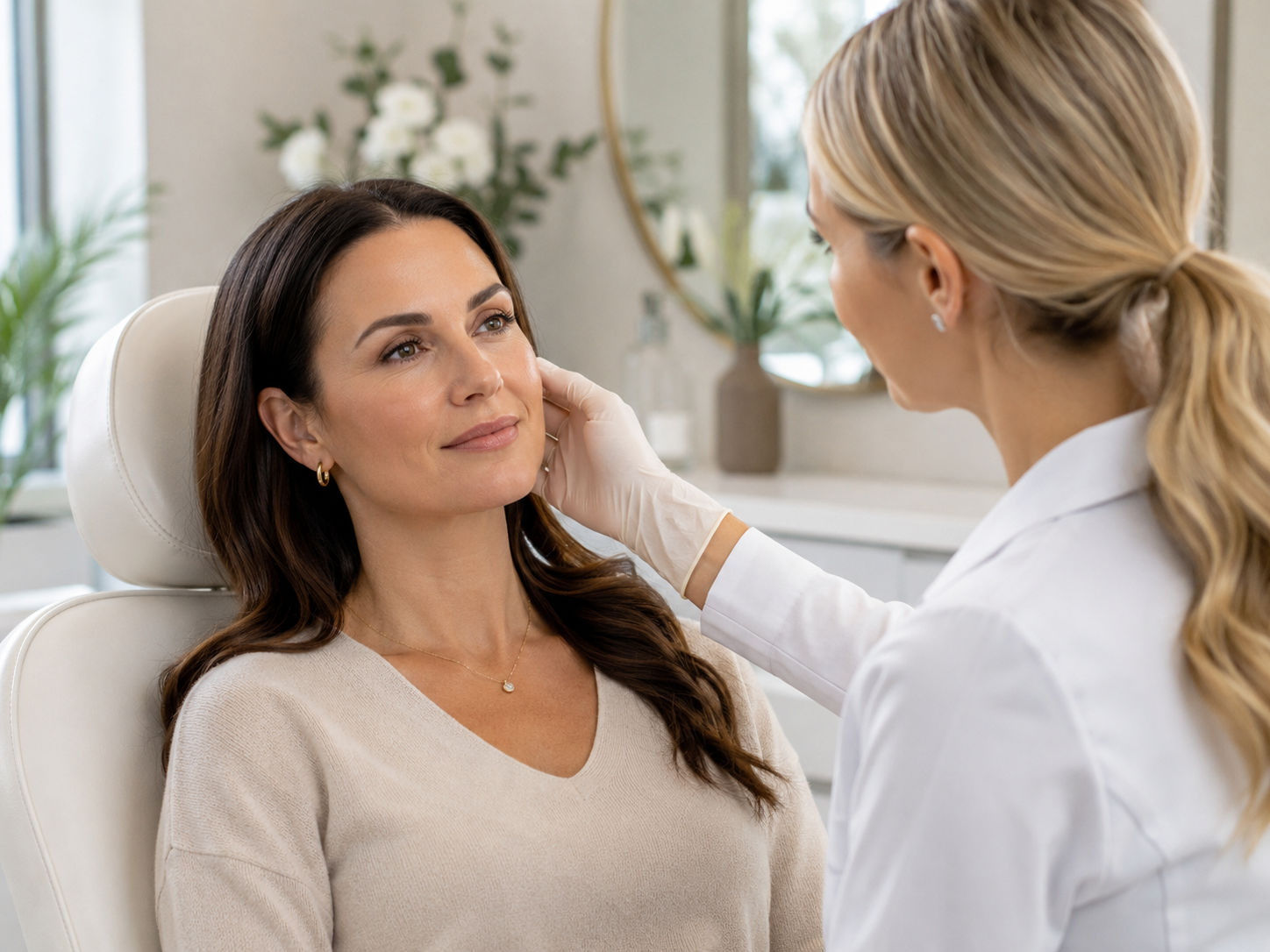
TL;DR: If you are wondering, "How long does Botox last?" many clients see results last around three to four months, though timing varies by dose, treatment area, muscle strength, metabolism, and consistency of treatment. Because every face moves differently, a personalized consultation with a qualified provider is important to plan your care.
Before booking your first session, you're likely asking a fundamental question: "How long does Botox last?" It's natural to want a simple three-to-four-month answer, but your actual timeline depends on your unique facial anatomy, muscle movement, and metabolism.
Setting realistic expectations helps you feel confident about your treatment experience. While we use "Botox" as the common term, these timing principles also apply to Dysport, though individual results vary.
Let's look at the broad pattern most clients experience after an injectable session.
For most people, wrinkle-relaxing cosmetic injections begin showing their first subtle signs of work within 3 to 5 days. You might notice a gentle softening in how your skin moves when you make expressions.
Results often continue to develop for up to 2 weeks. At that point, targeted muscle activity is usually reduced enough for your provider to assess your result.
Dynamic lines may look softer and smoother at this point. This window can be a helpful time for a follow-up check, especially after a first treatment, so your provider can see how your muscles responded. After reaching this phase, your results will remain steady for several weeks before gradually softening. Movement doesn't return all at once.
Most clients notice a slow increase in muscle movement between months two and three. By month three or four, many people find they're ready for their next session.
When exploring how long Botox lasts, it's clear that one size doesn't fit all. Your face is unique, and several personal factors affect how quickly your body processes the treatment.
If you have highly expressive facial muscles or naturally furrow your brow, you may notice movement returning sooner. Stronger or more active muscles may regain movement sooner. This doesn't mean you aren't a great candidate.
It just means we'll design a customized approach with the right dosing and timing for your expressive style.
Some larger treatment areas may hold results well for certain clients. Areas with frequent movement, such as around the eyes, may show a return of movement sooner for some clients.
Your practitioner will map out these zones clearly during your initial consultation so you know what to expect.
The amount of product used matters. Too little product may not create the desired result, while too much can increase the risk of an unnatural or heavy look. Skilled practitioners aim for a balance between softening lines and preserving natural expression.
Natural-looking results come from careful assessment and conservative, personalized dosing.
Metabolism, activity level, treatment area, and muscle strength may affect how long results last. Some people may metabolize the product faster than others, which can affect how long the results last.
It's an internal factor you can't change, but it can be planned for with a tailored maintenance schedule.
Consistency can affect your treatment pattern over time. First-time clients sometimes notice their initial results wear off slightly faster. Consistent treatment may help some clients maintain a softer look over time, but timing and results vary.
Seeing your treatment plan as an ongoing conversation with your provider helps us understand your facial movement, goals, and response over time.
Many people wonder how different brands compare in terms of longevity. Both Botox and Dysport are neuromodulators that temporarily relax targeted muscles. They often last about the same amount of time for many clients, though individual results vary.
Some clients notice that one option takes effect a couple of days faster than the other. The differences, when they exist, are usually very subtle.
What matters far more than the brand name is the skill, dosing, and placement chosen by your cosmetic nurse injector.
Some clients prefer not to wait until full movement returns before scheduling their next visit. When you wait until full muscle activity returns, your provider may need to reassess your movement and dosing pattern again.
A proactive approach may mean scheduling your next visit as movement begins to return. This may help maintain a softer look between appointments, reduce repeated folding in treated areas over time, and allow your provider to adjust dosing based on your response.
During the consultation, we can discuss a maintenance schedule tailored to your treatment area, facial movement, and goals.
Botox may not be appropriate for everyone. Your health history, medications, allergies, pregnancy or breastfeeding status, previous reactions, and treatment goals should be reviewed before treatment.
A consultation helps determine whether Botox, Dysport, or another option may be appropriate.
Every treatment plan should be personalized. Your plan should be built around your face, goals, and comfort level.
All injectable treatments at Afterglow Injection Studio are performed by Taina Golding, RN, or another qualified medical aesthetics provider after consultation to review your health history, goals, and whether treatment is appropriate for you.
Book your complimentary consultation with Afterglow Injection Studio to discuss a treatment plan based on your goals, facial movement, and health history.
With consistent treatment over time, some clients notice softer movement-related lines as the treated muscles contract less forcefully. Skin still changes with age, sun exposure, genetics, and lifestyle. Long-term care works best as part of a routine that includes great skincare and daily sun protection.
The rule of three is a helpful framework suggesting you should evaluate your results after three consecutive appointments. The first session is a learning experience for your skin. The second and third sessions may help your provider better understand your dosing needs, movement patterns, and treatment timing.
There's a cultural shift in which some younger people are questioning the need for early preventive treatments. Many prefer to fully embrace natural aging, while others worry about starting cosmetic routines too early. There is no universal right age to start, and your choices should always align with your comfort and self-image.
Stopping treatment is not expected to damage the skin or speed up aging. Movement will gradually return, and lines may become more visible again over time. You're always in control of your choices.
If you're curious how long Botox or Dysport may last for you, book a complimentary consultation with Afterglow Injection Studio.
We'll review your facial movement, goals, health history, and treatment options in a calm, supportive setting.
Disclaimer: We love sharing helpful insights on our blog! Please remember, this is for general information only and isn't personal medical advice. For guidance tailored to you, it's always best to chat with a qualified professional before making any treatment decisions. Everyone’s experience and results can vary.

