
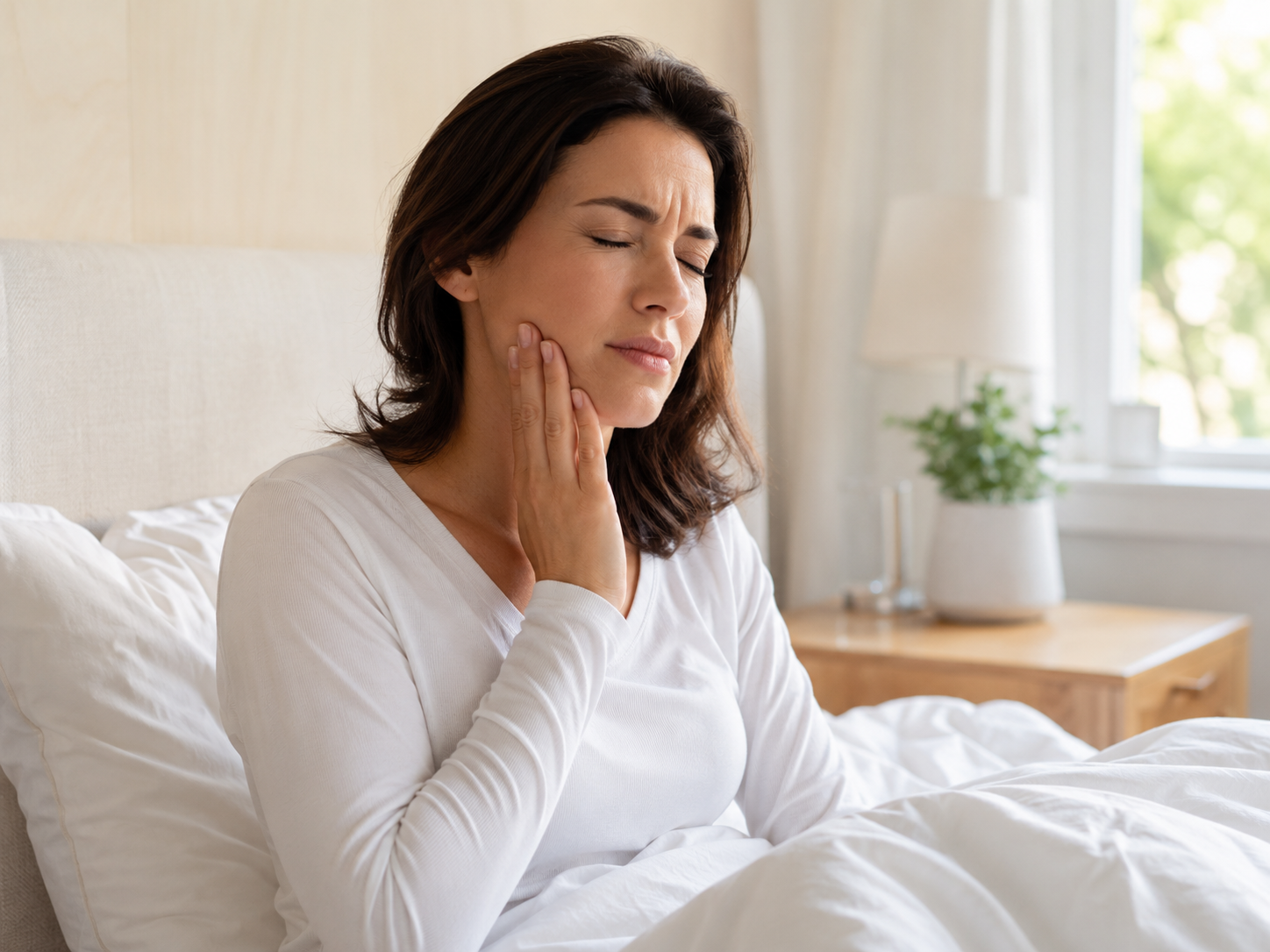
TL;DR: Discovering how to stop clenching teeth at night requires looking past surface-level habits to address the underlying sources of sleep-related muscle strain. While traditional dental nightguards safeguard your tooth enamel, they don't automatically stop the subconscious muscular contraction. Scheduling an in-person assessment with a regulated healthcare provider is a practical step to evaluate your facial patterns and safely explore your clinical care options.
You wake up with a dull ache radiating through your cheeks. Your temples throb before you even open your eyes. Your teeth feel remarkably tender, as if you spent the entire night chewing something incredibly tough, except you were fast asleep.
Perhaps a partner mentioned hearing an unsettling grinding sound in the dark. Maybe your family dentist pointed out flattened wear patterns on your back molars.
You already know you grind your teeth. What you really want to know is how to make the tension stop.
The frustrating reality is that most generic advice focuses entirely on basic, surface-level fixes. Wear a standard plastic nightguard, cut back on your afternoon coffee, or try to practice basic mindfulness.
Many people cycle through multiple off-the-shelf remedies for years without experiencing a real difference in how their face feels each morning.
Teeth grinding at night, clinically known as sleep bruxism, isn’t a simple behavioural habit you can choose to drop. Because it occurs while you are completely unconscious, willpower has nothing to do with it.
Sleep bruxism is linked to nervous system activity during sleep and can occur without conscious control. Your body responds to complex physical signals that happen while you rest.
Psychological tension, daily anxiety, and high-pressure lifestyles are regularly linked to jaw clenching. Stress may contribute to muscle tension, and some people notice more clenching during busy or difficult seasons. When your mind stays active, your body can hold onto that stress, expressing it through intense pressure.
However, the standard advice to "just relax before bed" overlooks a large segment of the population. Many individuals who experience severe morning jaw tension don't feel consciously anxious. They may already exercise regularly, practice excellent sleep hygiene, and maintain a balanced lifestyle, yet they still wake up with a sore face.
This happens because stress is only one piece of the anatomical puzzle. Other common triggers include:
Understanding these underlying factors is highly important. The most practical path forward depends entirely on what is driving your specific muscle tension.
It's helpful to be completely honest about dental nightguards, as they're typically the very first recommendation you receive. A custom-fitted oral appliance creates an important physical barrier between your upper and lower teeth, preventing severe enamel wear.
Nightguards are incredibly valuable pieces of protective equipment. We never suggest skipping them.
However, a guard is a protective shield, not a definitive cure. Think of it like wearing a high-quality helmet while riding a bicycle. The helmet doesn't stop you from bumping into a curb; it simply minimizes the impact when you do.
Similarly, a plastic guard doesn't stop your brain from signalling your jaw to clench. It merely cushions your teeth.
This explains why many people faithfully wear their appliances every single night yet still wake up with morning tension and facial fatigue. Your masseter muscles are still contracting with significant force all night long, even if your teeth can no longer physically grind against each other. When muscle fatigue remains the primary concern, your care plan needs to focus directly on the muscles themselves.
A few conservative, home-based approaches can help manage baseline muscle tension over time. These techniques require daily consistency and work in harmony with your body's natural anatomy.
While you can't control your actions during sleep, you can directly influence the baseline tension your face carries into the evening. A surprising number of people clench their teeth throughout the day without realizing it, often while focusing on a computer screen, driving through traffic, or lifting heavy objects.
Try setting a few random reminders on your phone today. When the alert goes off, take a quiet moment to check your posture.
Are your upper and lower teeth touching?
Is your tongue pressed hard against your teeth?
The ideal, relaxed position for your mouth is with your lips gently closed, your teeth slightly apart, and your tongue resting softly on the roof of your mouth just behind your front teeth. Practicing this habit may help you notice and reduce daytime jaw tension.
Dedicate 5 minutes to relaxing your facial muscles right before you turn off the lights:
Some individuals follow every conservative step perfectly: they wear their custom guards, manage daily stress, and practice bedtime stretches, yet they still experience severe jaw fatigue. This typically happens when the masseter muscles remain stuck in a permanently tight, over-activated state.
When a muscle is conditioned to clench over several years, it automatically defaults to that tight pattern. Breaking this physical cycle often requires professional clinical care rather than simple behavioural changes.
During an in-person assessment, a regulated provider may review your medical history, jaw movement, facial muscle patterns, and overall concerns. From there, they can explain which options may be appropriate and what realistic expectations look like.
An evaluation with a qualified professional helps clarify your options, ensuring that any chosen path is safe, customized, and tailored to your unique anatomy.
It's easy to dismiss teeth grinding as a minor evening habit, especially if you've lived with it for half your life. However, long-term bruxism creates quiet, cumulative damage that can suddenly affect your overall quality of life:
Addressing bruxism early isn't about cosmetic changes. It's about proactive care for your joints, your dental health, and your daily comfort.
Waking up with facial fatigue or planning your morning around a sore jaw shouldn't be your default routine. Easing chronic muscle tightness starts with an educational look at your unique sleep patterns and physical anatomy.
Our clinical team is ready to help you look at the big picture in a calm, welcoming environment. We invite you to step away from the cycle of temporary fixes and start exploring an assessment built entirely around your comfort.
Book Your Complimentary Consultation Today
Managing clenching often starts with identifying possible triggers, speaking with a dentist about tooth protection, and reviewing jaw tension with a qualified professional. If the issue is rooted in deep muscle patterns, an evaluation can clarify which clinical approaches may be appropriate.
There is rarely a single source for sleep bruxism. It typically stems from a combination of central nervous system sleep transitions, emotional stress, physical jaw misalignment, or specific medication interactions.
The most practical way to manage daytime clenching is to use physical or digital triggers that remind you to check your posture. Actively separating your teeth and resting your tongue on the roof of your mouth helps retrain overactive facial muscles.
When your brain enters a state of deep concentration or physical exertion, your body naturally releases physical tension. The masseter muscles are prime targets for this subconscious stress response, tightening up without your conscious awareness.
In severe, unmanaged cases, yes. Chronic grinding can lead to degenerative changes in the temporomandibular joint, including wearing down the protective cartilage disc. Addressing the issue early helps protect long-term joint function.
Disclaimer: We love sharing helpful insights on our blog! Please remember, this is for general information only and isn't personal medical advice. For guidance tailored to you, it's always best to chat with a qualified professional before making any treatment decisions. Everyone’s experience and results can vary.

